Hiring the right interior partner for office spaces is not a routine decision. It shapes how an office supports daily work. In cities like Delhi NCR, Mumbai, Bengaluru, and Gurgaon, choosing a corporate interior design company in India becomes a necessity. Commercial real estate stays under constant pressure, and the wrong choice might result in delays, redesigns, and cost overruns.
Most companies start the same way. They compare portfolios and pricing. Both matter, but neither tells the full story. What matters more is how a design team thinks before work begins and how it behaves during execution. This blog brings together the most important questions that help businesses evaluate capability, transparency, and long-term reliability.
Corporate interiors need a different approach. Residential or retail work does not prepare a team for this level of planning. Offices carry more weight. They support teams, systems, compliance, and future growth at the same time.
Ask about projects that match your scale. Ask about the industries they have worked with. IT offices, consulting firms, and co-working spaces all come with different demands. How a team handles these differences matters more than presentations. Experience is not about years alone. It is about relevant execution in real office conditions across India.
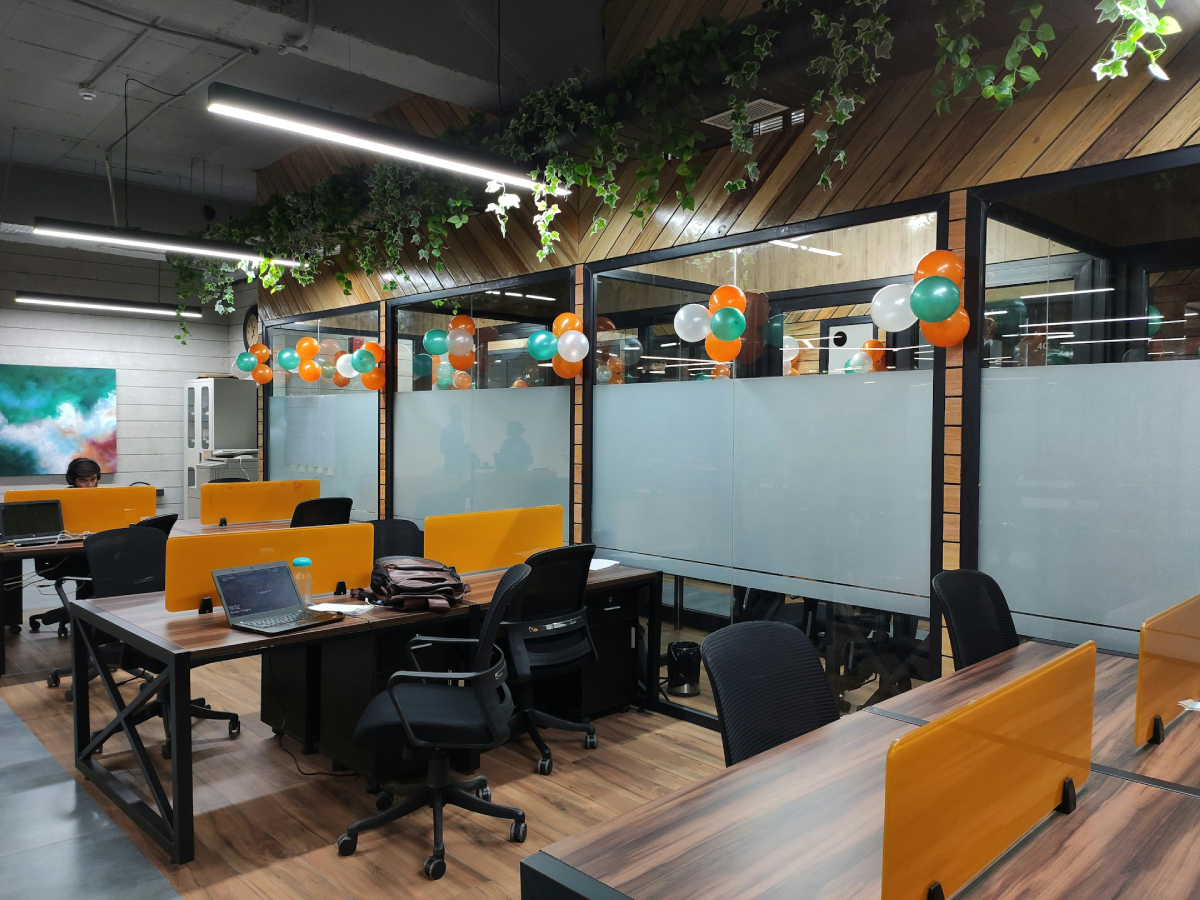
A portfolio is useful only when you evaluate it correctly. Look at completed spaces, not just 3D renders. Real photographs reveal finishing quality, detailing, and material accuracy. Look at consistency across projects. Some firms look strong in one project and weak in another. That difference shows real capability. If the team is reliable, they know how to execute projects clearly even when there is a change in design theme.
A well-defined process is often what separates professionals from ad-hoc teams. The flow starts with basic requirement gathering and site understanding. After that, it moves into space planning, layout optimization, and concept design.
Once approved, 3D visuals and material selection come next. Execution happens on-site with supervision. The project ends with a handover. If a company cannot explain this clearly, execution risks increase later.
A corporate space is a physical expression of how a business works. Design should reflect culture, structure, and communication style. A structured organization needs a different spatial logic than a fast-scaling startup. Ask how brand thinking translates into layouts, materials, and zoning. The answer should go beyond colors and logo placement alone.
The project stability is defined by cost clarity. Check what is included in the quotation and what is not. You must know how material, labor, and execution costs are structured. Ask how changes are priced during the project. A reliable corporate interior design company in India shares the pricing clearly before work begins. If the cost is not provided in detail, it may lead to conflicts later.
Office projects rarely run in ideal conditions. Materials get delayed. Site conditions change. Decisions shift. Ask how timelines are created and how milestones are tracked. Ask what happens when delays occur. A realistic timeline reflects planning depth. Over-optimistic timelines often fail during execution.
In many corporate fit-out projects, procurement delays and approval bottlenecks are among the most common causes of timeline extensions. Companies that establish clear milestones and regular progress reviews are generally better equipped to manage these challenges and keep projects on schedule.
Execution quality depends on what happens on-site. That is where plans turn into reality, one decision at a time. A single person should be held responsible for looking after the project. They coordinate with vendors, resolve issues as they arise, and keep the project aligned with the design team.
Clear ownership keeps the work on track. Lack of ownership creates gaps that weaken the communication. This causes the team to skip details, and the design loses accuracy as it moves from drawings to the site.
Materials define the durability and long-term performance of an office interior. Ask where materials are sourced from and how quality is verified before installation. It is important to know whether vendors are fixed or project-based. Strong vendor systems create consistency. Weak systems create variation in finish and quality.
Corporate requirements evolve, teams expand, and technology needs change. You must ask how changes are evaluated. Ask how the cost and timeline impact is communicated before approval. A structured change process protects both sides. It prevents uncontrolled revisions during execution.
Work does not end when the office is handed over. Teams move in, and work patterns settle over time. Small issues start to show, like a drawer may need fixing or a partition may need adjustment. Space often needs adjustments once real use begins.
Good post-handover support deals with these changes without delay. It shows that the project was not treated as a final task but as an ongoing responsibility.
Before you evaluate portfolios or quotations, understand what is at stake. A corporate interior project is not limited to visual design. It has a direct impact on how people work and how the space is utilised efficiently.
Asking the right questions gives you a clear picture of how the company approaches projects. It helps you assess their execution, cost, and timeline issues. It enables you to understand how they manage responsibilities from start to finish.
Even after shortlisting a company, many businesses make avoidable mistakes:
These mistakes often lead to delays, budget overruns, and unnecessary project challenges.
The overall cost of a corporate interior project is influenced by a combination of design, execution, and infrastructure requirements.
Understanding these factors helps businesses establish realistic budgets and avoid unexpected costs during execution.
A successful office interior project goes beyond aesthetics. It influences employee experience, workflow efficiency, collaboration, and long-term business growth. Choosing the right partner early in the process helps ensure that design and execution decisions support both current and future business needs.
Selecting the right corporate interior design company in India is not about picking a service provider. It is about choosing a team that can plan, build, and deliver with consistency over time.
Good questions help you see how they think. They also show how they work under real conditions. A structured approach leads to better decisions. Workspaces then function better, scale when needed, and support business goals without getting in the way.
Planning a workspace that works for your business? Get in touch for office interior design and execution. Book a consultation today.